
Level 3 – Night anchorage with friends
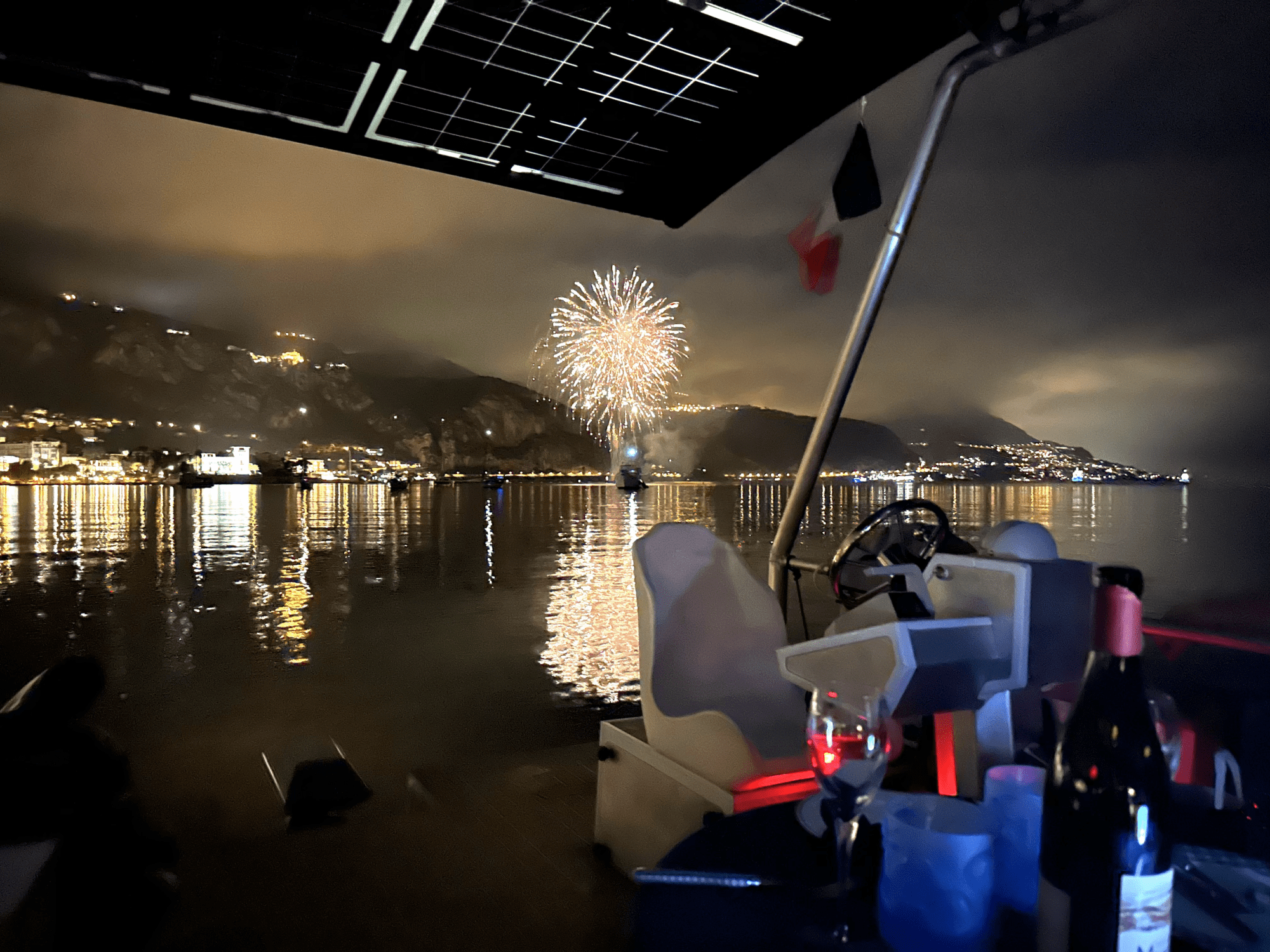
🎯Objective: Boating at night, for an anchorage in front of the Villa David Niven
👨✈️ Accompaniment: You are the captain
👨🎓 Audience: You must have practised 10 day trips in the last 12 months as a member of the boat club to be able to pass the required Level 3. In addition, you must have a VHF radio communication license or certificate.
✅ Program:
The possibility of going out in the evening brings an extraordinary dimension to solar pleasure. What a pleasure to slide silently, with your loved ones around a good meal, barely hearing the lapping of the waves. By regularly going out out of season, you can easily reach the level required to go out in the middle of the night season.
Specific attention point for night out
Recognise the coast
Caution must be maximised. You should only sail in places that you have perfectly spotted during the day. Pay close attention to the entrance to the day harbour.
At night, the lights will help you find your way around. The green beacon must remain on your right when entering the port. Be careful not to get the wrong green lights, there are several! That of the harbour oscillates by 3 clusters grouped over a period of 12 seconds.
Collisions
Crossing an outboard boat at night is potentially more dangerous. Captains are sometimes less vigilant and you will not be able to know. Don’t forget to turn on the position lights, it’s a must. We also recommend that you bring your own flashlights. If you see a motor boat dangerously crossing your road at high speed, avoid, even if you think you have priority, and signal your presence with your torches.
Every time you pass in front of a port, in front of a channel, you are on a trajectory of a boat that can either enter or exit. In some cases, the boats exceed the authorised speed limits. By navigating exclusively in the area between the David Niven anchorage and the port, you significantly reduce the risk of traffic collisions.
Management of solar autonomy at night
The solar boat only runs on the night battery. As long as the boat has been used during the day by a previous crew, you will not be at 100% load. Fortunately, night navigation has nothing to do with day navigation. For the security reasons mentioned above, we will not sail far. In addition, night navigation lends itself to sliding in almost absolute silence. In these conditions you will consume very little and it is still possible to bring the boat back to the port with its batteries charged.
Night support
At night, we can no longer provide you with the same level of assistance at sea. Do not hesitate to call us if you have any questions but we do not provide a permanence and it is not certain that we can pick up. Before you leave, think about distress situations and what you would do if a problem were to arise. Think as if you were the owner of the boat!
If you witness or are a victim of a problem at sea, the CROSS MED at 196 is there to coordinate assistance as a last resort. And don’t forget that the boat has an oar, an anchor and a floating anchor.
Leave the boat at night
Small additional precaution when you leave the boat at the dock, remember to move it as far away from the dock as possible to discourage any untimely visit. The surveillance camera is there to ensure that no one will come on the boat after you have left it as is. Make sure it works well so that there are no ambiguities.