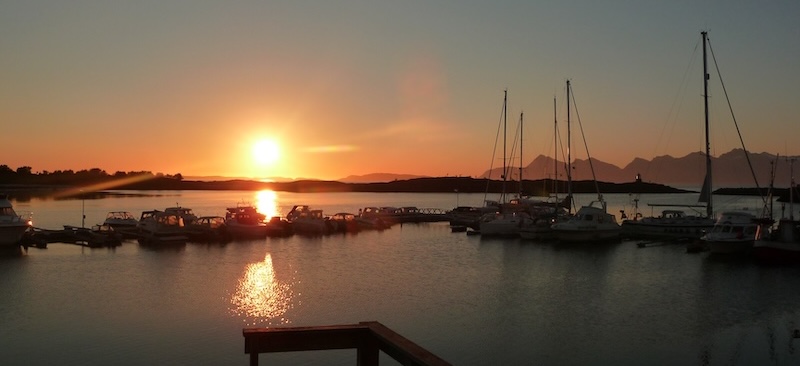
Eco Tourism – Eco cruising is coming to Norway
Norway is one of the best preserved regions in the world. It’s no surprise that this popular destination for cruise lines advocates ecotourism. At seaZen, a pioneer in 100% solar-powered sailing since 2016, we’re looking to promote new uses for tourism. But it’s no coincidence that Norway is also the European country with the highest rate of electric vehicles. It’s all a question of usage.
Selar – the world’s most sustainable solar cruise
The Captain Arctic is a revolutionary sailing ship under construction, designed to be the world’s most sustainable expedition vessel. Powered mainly by wind and solar energy, she is equipped with rigid aluminum sails incorporating 2,000 m² of photovoltaic panels. These systems supply the energy needed for navigation and life on board via batteries, and the propellers can generate electricity when used as hydro turbines.
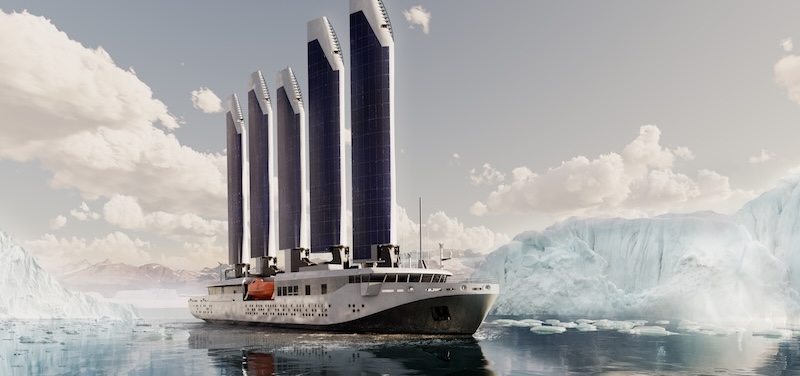
Designed for maximum energy efficiency in polar environments, the ship features an optimized hull, advanced insulation and innovative equipment. It produces fresh water via reverse osmosis, uses a recycled wood pellet boiler for heating, and recycles waste and wastewater to reduce its environmental footprint. Its port engines run solely on HVO biofuel, reducing its emissions by 90% compared with conventional ships.
A nature-friendly adventure
The expeditions organized by Selar, the shipowner of the Captain Arctic, prioritize total respect for the environment. Unlike icebreakers, the ship does not cut through pack ice, but sails silently through the ice to unexplored areas, without vibration or emissions. These voyages, in small groups, offer a unique immersion in harmony with polar flora and fauna.
…and exemplary in social responsibility
Selar is a shipping company committed to a responsible and sustainable approach, embodying a “sustainable native” philosophy. It operates the Captain Arctic under the French flag, guaranteeing compliance with safety and labor law standards. Its founder, Sophie Galvagnon, the first woman to command a polar expedition ship, aims to improve working conditions for sailors with shorter rotations and to establish an exemplary gender mix within the crew, including for technical and command positions.
Hurtigruten – Norway’s favorite brand
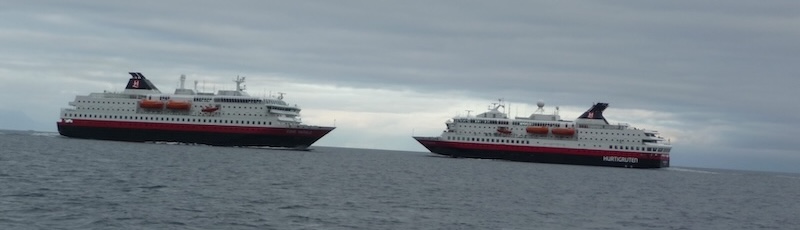
All Norwegians are familiar with Hurtigruten, as it operates the main shipping line criss-crossing the country’s coasts – from north to south and vice versa – offering both passenger and freight transport and cruises aboard a versatile ship type. This mythical company is currently making its energy transition with its hybrid ships.
This company has already long been operating a hybridization between freight ship, cruise liner and passenger shuttle. Now the propulsion is going hybrid too. This will make it possible to combine conventional motorization – unfortunately highly polluting – with electric propulsion in ports.
Publicly accessible eco-cruise programs
2019 Construction of the first hybrid cruise liner
Hurtigruten has launched the MS Roald Amundsen construction benefiting from groundbreaking technology to significantly reduce fuel consumption.
2020 Construction of second hybrid liner
The MS Fridtjof Nansen is the second hybrid liner. The inaugural trip will visit Denmark and the British Isles, culminating in a visit to London Bridge.
The MS Roald Amundsen is primarily assigned to Antarctic cruises, but will also offer Norwegian itineraries at certain times of the year from the Tromsø region in northern Norway. With a launch scheduled for 2020, the MS Fridtjof Nansen for her part will criss-cross the Norwegian coast, from north to south, departing from Hamburg according to itineraries, to enable her passengers to fully discover Norway’s famous fjords.
Respectful of the environment, these ships are also designed to offer a high level of comfort and unprecedented entertainment options. On board both ships, passengers have access to an edutainment center featuring high-tech equipment such as interactive screens and scientific instruments. To deepen and broaden their knowledge of the Norwegian regions, they can chat with the crew. In addition to the exterior and interior observation decks, the ship also features an observation lounge known as the Explorers’ Lounge. Thanks to its panoramic windows, this space allows passengers to enjoy the scenery with a drink in hand.
What are the most remarkable sights on a cruise in Norway?
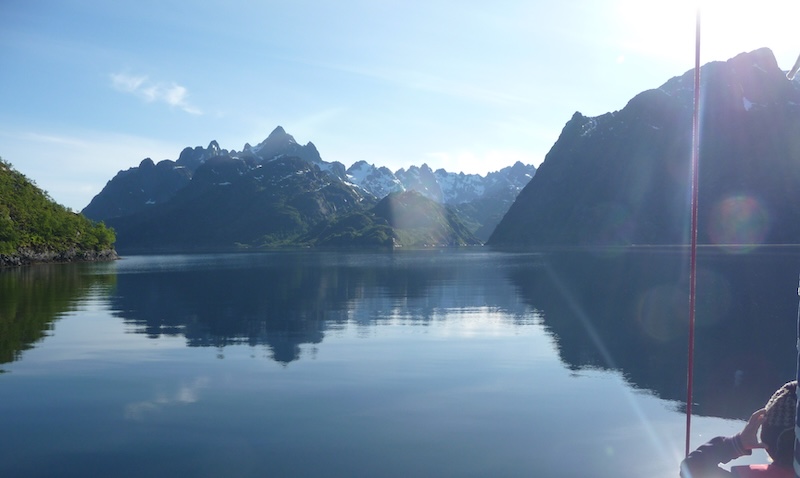
Dotted with spectacular fjords attracting travelers from the four corners of the globe, Norway is an ecotourism destination par excellence. Among the must-visit ports of call on an eco-cruise in Norway is the Geiranger fjord, located on the country’s west coast. It’s one of Norway’s best-known and most imposing fjords. Since 2005, it has been classified a UNESCO World Heritage Site. This fjord offers exceptional scenery made up of snow-capped peaks, lush vegetation and waterfalls tumbling down steep cliffs. During the navigation, before arriving in the town of Geiranger, you’ll catch a glimpse of the famous waterfalls of the Seven Sisters.
Considered the gateway to the Arctic, Tromsø is an essential stopover on a cruise in northern Norway. It is the starting point for polar expeditions. With its unique architecture, rich past and vibrant culture, not to mention its exciting nightlife, the city has certainly lived up to its nickname of the Paris of the North. Although culturally active, Tromsø remains close to nature. Nestled in the heart of a sumptuous landscape, it is home to the world’s most northerly botanical garden.
It’s all about use
How can we encourage these approaches and accelerate the deployment of sustainable cruise ships?
Maybe first and foremost by using electric or hybrid cars for our everyday uses. It’s no coincidence that Norway is also the European country with the highest rate of electric vehicles.
It’s common to think that solar navigation could only work on the Côte d’Azur thanks to its sunny climate. SeaZen has been proud to prove this since its launch in 2016. But with the midnight sun in summer, polar boats receive the sun’s rays 24/24 beyond the Arctic Circle. It’s all a question of uses.