
Eco design of solar powered boat
Solar navigation does not only offer decarbonized navigation by its use. Over the entire life cycle, it exceeds 90% decarbonization compared to the dominant solutions in the market. It avoids underwater noise pollution, which would be the main environmental damage directly attributable to yachting. It makes it possible to produce a 70% recyclable boat. Responsible yachting is a reality, which has met its audience as evidenced by the success of SeaZen.
Carbon footprint
This begins with an analysis of the life cycle limited to carbon emissions. The method is gradually being deployed in the nautical sector since on April 16, 2024, European Boating Industry (EBI) launches a European project.
With the help of the Solar Impulse foundation, SeaZen achieved a first estimate of the carbon footprint. in March 2022.
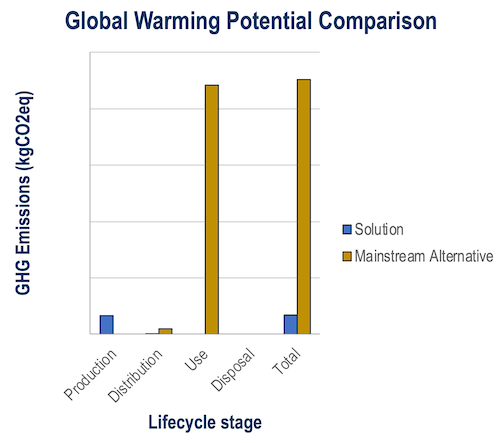
This footprint was carried out with a very conservative approach given the imprecision of certain data. For example, the production valuation could not take into account all the data. Taking the worst-case scenario for the analysis, only the production footprint of the solar boat, the “Solution”, is estimated. The mainstream alternative is valued at zero.
Zero impact?
Let’s continue with some very concrete indicators that correspond to the main nuisances generally cited in connection with boating. Solar navigation proudly scores zero everywhere!
Zero CO2 emitted
A solar boat is first and foremost an electric boat, so it emits no CO2.
Zero fuel emissions
As the boat is electric, it has no fuel tank, which eliminates the risk of hydrocarbon pollution.
Zero noise pollution
According to the French Ministry of the Sea, underwater noise generates stress throughout the food chain. Worse still, according to recent bioacoustic studies, the ocean can die from noise.
A solar boat is particularly quiet not only because the electric motor is not noisy, but also and above all because the lifestyle associated with slow sailing generates less noise from the propeller and from flows on the hull.
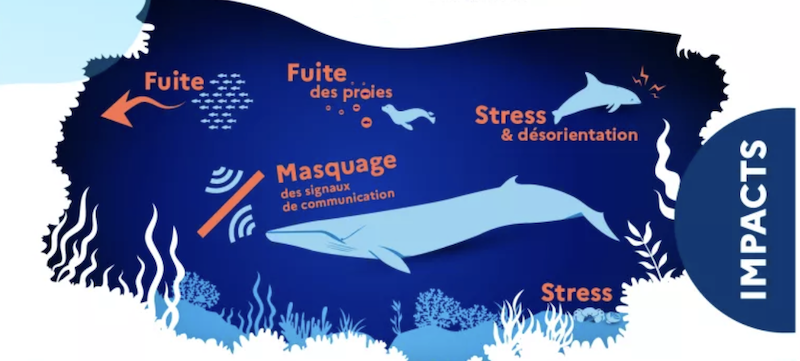
According to bioacoustician Michel André, quoted by the Rolex Foundation: “we know that [the] noise pollution affects not only animals capable of perceiving sounds, but also passive species that do not hear but detect the vibrations. These analyses have been confirmed in crustaceans, shellfish, corals, and all invertebrates, i.e. several thousand species. […] The whole food chain is affected by noise in all the seas around the world.”
Zero consumption
The same goes for consumption: zero everywhere!
Electricity
Depending on the country, the production of electricity needed to charge the batteries of an electric motor emits more or less CO2. A solar boat simply avoids consuming electricity from the national grid.
Fresh water
In times of drought some ports prohibit the use of fresh water for cleaning boats. The use of cork for decking is adapted to this new constraint, which is likely to recur more and more often.
Paper
The sincerity of a responsible commitment is revealed in the smallest details. For example, 100% of reservations are made online. This avoids the need to print out pages for each new rental contract.
Recyclable boat?
Fiberglass is not recyclable, even though it accounts for almost 80% of the mass of most traditionally designed boats. Good practice aims to favor recyclable materials and avoid all superfluous material.
More than 70% recyclable
SeaZen has succeeded in replacing fiberglass with aluminum and cork at over 70%. We’re starting to be able to talk about a recyclable boat!
Non-recyclable Recyclable Carbon sink
Fiberglass Aluminum Cork
Less than 20% More than 70% More than 5%
Composition of a SeaZen solar boat
More than 300 kg of material avoided
The cumulative experience of more than 3 generations of solar boats has enabled us to gradually eliminate unnecessary material. The efficiency of solar navigation considerably reduces the use of batteries and electric cables. The cork deck avoids the use of synthetic materials. And here’s the result:
Battery Plastic Copper
230 kg 80 kg 10 kg
320 kg of material avoided